

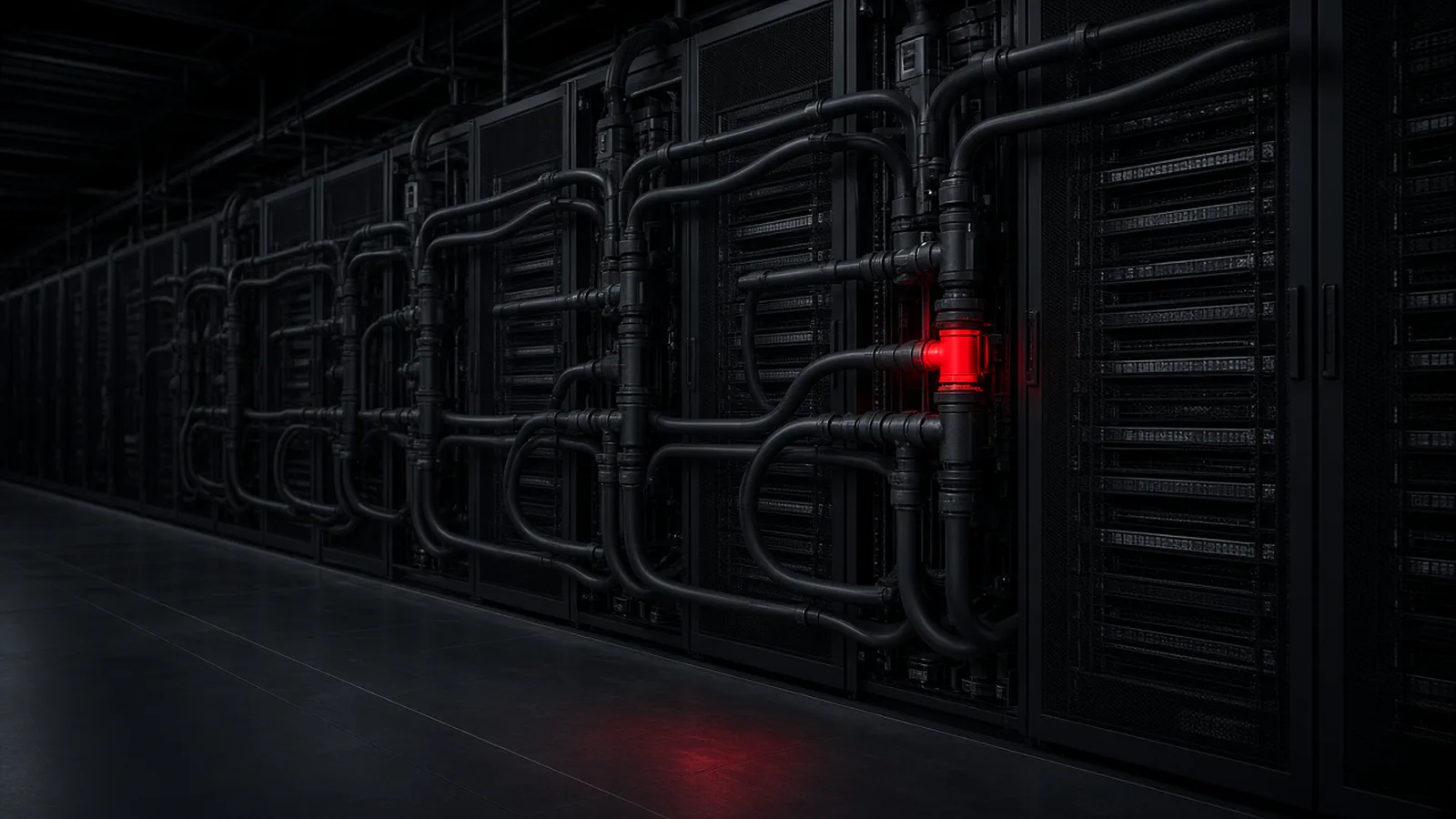
Placing AI and GPU infrastructure in Kazakhstan as colocation means matching the site to rack density, heat removal and power redundancy, not to empty floor space. In the Akashi Data Center design in Astana, server cabinet rental is specified at up to 20 kW per rack and includes AI/ML. For higher density, a separate module, DC-4, is designed for high-density AI workloads and high-performance computing: up to 150 kW per rack, liquid cooling, and design IT capacity of up to 30 MW.
The general account — how GPU colocation differs from cloud, and what to check at any facility — is already in the guide GPU colocation for AI. Below is a different question: which densities and which heat removal the Akashi design actually states, and how to match a rack to them.
What does a high-density workload need from a data center?
The site separates an ordinary rack from a dense configuration. It does not set a universal “GPU threshold”. Classic CPU racks in the colocation guide fit within 5–10 kW. Dense configurations and mixed CPU/GPU workloads need 15–20 kW and above, and with that a cooling scheme matched to the density.
The check then follows the design, not an average for the hall.
- The stated kilowatts per rack cover the specific configuration. For a cabinet that is up to 20 kW. The campus modules have different ceilings — they are set out below.
- Cooling matches the density. Liquid cooling is stated for high-density configurations; on module DC-4 it is part of the engineering.
- Power does not stop the load because one element fails. That is a property of the Tier IV topology designed into the first phase.
- The floor and the cabinet size take the actual hardware. The campus states a floor load of 2 tons per m² and a raised floor of 1.6 m; the standard cabinet is 1200 mm wide.
- Paths do not collapse into a single entry. The campus has four independent optical entries and is operator-neutral.
- Capacity can be locked before launch. The first-phase pipeline is already filled.
Construction progress and the module split are published in the piece on the campus in Astana.
What density is designed into the modules?
The figures come from the campus description on the site. The actual rack count depends on the client’s requirements and on power per rack. The full campus is up to 100 MW of IT capacity and up to 4,224 racks.
| Module | IT capacity | Per rack | What the site says it is for |
|---|---|---|---|
| DC-1 | 5.28 MW | up to 15 kW | first phase |
| DC-2 | 12 MW | up to 30 kW | a campus module |
| DC-3 | 12 MW | up to 30 kW | a campus module |
| DC-4 | up to 30 MW | up to 150 kW | high-density AI and HPC, liquid cooling |
DC-4’s floor area is comparable to the first module. In compute it is meant to be the most powerful building on the campus.
Cabinet rental sits apart from this grid: up to 20 kW, 1200 mm wide, coded access, dual PDUs, including for AI/ML. You can start with one cabinet. A load above 20 kW per rack should be matched to a module whose ceiling is stated at that level: DC-2 and DC-3 up to 30 kW, DC-4 up to 150 kW. A non-standard cabinet size goes in a cage. If cooling engineering has to be set to your requirements, that is the contour of a dedicated room.
How does the design remove heat?
DC-4 engineering provides for liquid-cooling technologies. Colocation materials state liquid cooling for high-density configurations; the engineering write-up includes readiness for liquid cooling of high-density AI racks. These are design statements: the first phase has not been handed over, and launch is May 2027.
In the same write-up, Astana’s climate allows free cooling for much of the season. Free-cooling and hybrid modes are designed to cut energy use by up to 40% versus conventional operation. The target PUE is below 1.4. ISO 14001 alignment is part of the published standard set; it is not a separate certificate of a built hall. More is in the piece on green engineering and on the ESG page.
How is power arranged for this kind of load?
The campus is designed with two independent entries in an active/active scheme with 110 kV redundancy, and dual electrical redundancy per building. UPS redundancy is 5/4N, with up to 10 minutes of battery backup. Backup generators provide 12 hours of autonomy at full load, with two fuel suppliers and a 4-hour delivery SLA.
The main power equipment of the 110/10 kV substation is installed on site, and a dedicated power line has been brought in. The campus description notes that the facility uses a reserved power margin and does not take electricity intended for the city’s current consumption. The technical conditions allow capacity to grow as later phases come online.
The design documents of the first phase (DC-1) hold Uptime TCDD Tier IV (Certification of Design Documents). That confirms the design, not the built hall. The audit of the constructed facility, TCCF, is planned for April 2027. TCDD is not TCCF. Designed availability at Tier IV level is 99.995%. What that changes in a colocation contract is in Tier III or Tier IV and on the Tier IV page.
What should you prepare before the conversation?
- The kilowatts per rack you need and the rack count — to set them against the 20 kW cabinet limit and the module ceilings of 15, 30 and 150 kW.
- Whether you need a liquid-cooling scheme or the cabinet density is enough.
- A standard 1200 mm cabinet or a non-standard size.
- Mass against the floor load of 2 tons per m².
- How many independent paths you need. The campus has four optical entries; the client chooses operators and routes for their own requirements on resilience, bandwidth and latency.
- The date relative to May 2027. Before launch the DC-1 pipeline is 107% full (5.54 MW reserved), so capacity is locked by a reservation, not by waiting for a free rack on opening day. Why that is so is in the piece on reserving before launch.
Construction progress is on the construction progress page.
Frequently asked questions
Can a GPU deployment use a rented cabinet at Akashi? Yes, within the stated density: up to 20 kW per rack, including AI/ML. Above that limit the configuration is matched to a module, not to a standard cabinet.
Where do loads above 20 kW per rack go in the design? DC-1 is up to 15 kW, DC-2 and DC-3 up to 30 kW. DC-4 is up to 150 kW per rack for high-density AI and HPC, with liquid cooling and design IT capacity of up to 30 MW.
Is liquid cooling already running in the hall? It is in the design: DC-4 engineering provides for it, and colocation materials state it for high-density configurations. First-phase launch is May 2027.
Does a Tier IV certificate already confirm a built hall for AI? No. TCDD confirms the design documents of the first phase. TCCF is the audit of the constructed facility, planned for April 2027. TCDD is not TCCF.
When can power for a GPU cluster be reserved? With sales, now. The first phase launches in May 2027, and the DC-1 pipeline is already 107% of capacity (5.54 MW).
Ready to discuss density and a reservation? Send a request to sales.