

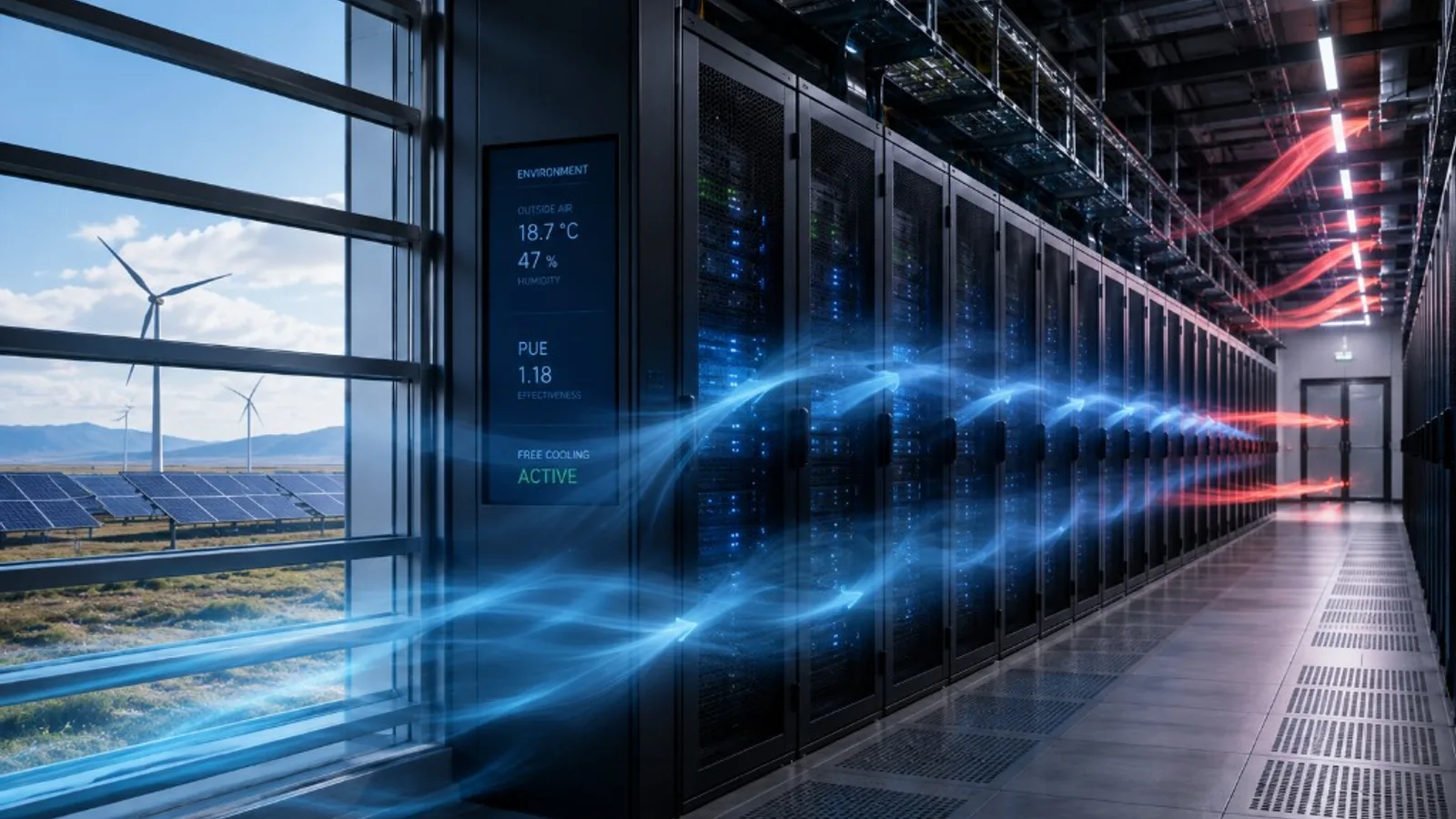
Compute demand — especially AI — is rising faster than new capacity. DKNews explains how data-center sustainability became engineering: energy, water, heat reuse, and transparent reporting.
Global average PUE in 2024 sits near 1.56; new sites push toward ~1.3 via aisle aerodynamics, insulation, and free cooling. European rules push metric disclosure. Hyperscalers move toward hourly clean-energy matching; operators cut water intensity and feed waste heat into city networks; Microsoft is testing hydrogen backup instead of diesel.
Where Akashi fits
Akashi Data Center is designed so sustainability is baseline logic, not an add-on. Astana’s climate supports free cooling for much of the year; target PUE is below 1.4. The design includes readiness for liquid cooling of dense AI racks and a controlled water loop.
Customers are promised dashboards for efficiency, water, and equipment reuse metrics. For international trust, energy and environmental management systems toward ISO 50001 and ISO 14001 are in preparation, with building certification aiming at LEED or EDGE.
Sustainability no longer competes with reliability — it enables it. For Akashi that is a competitive edge: clear kilowatt-hours, careful water use, and open reporting for CIOs, investors, and regulators.
Source: DKNews