

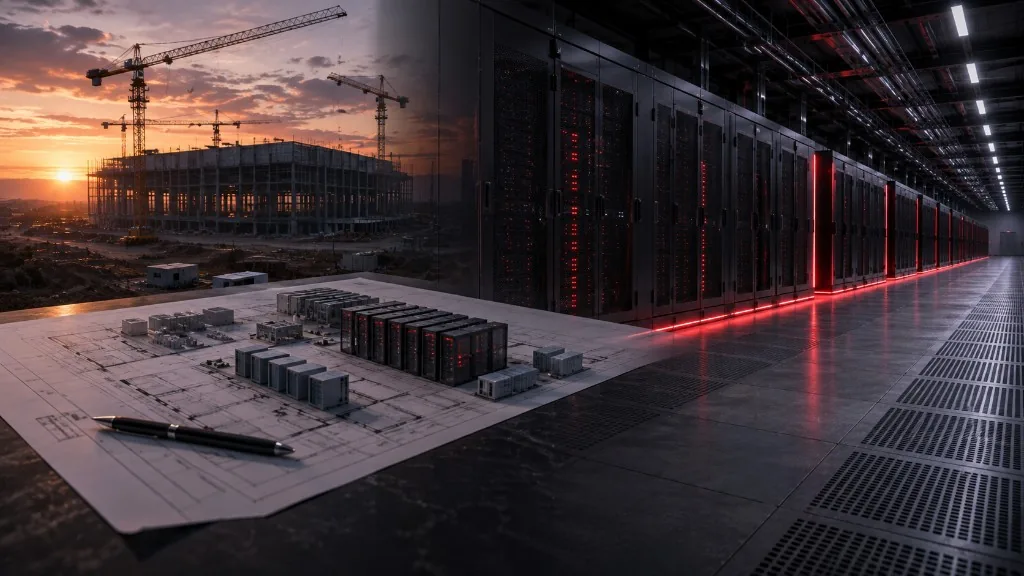
When an IT team needs a site “today,” a facility still under construction looks worse than one already live. When the team is planning an owned CPU fleet 12–18 months out, the logic flips.
Why “already live” ≠ “capacity for you”
Commercial racks of the right class and density are often locked into long contracts. By the time hardware lands in the warehouse, free power may be gone — or what remains may not fit your design (density, cooling, network entries).
What pre-lease actually buys you
| Question | Why lock it early |
|---|---|
| Power and density | racks for your CPU profile, not leftovers |
| Timing | hardware delivery aligned with hall readiness |
| Compliance | a clear facility address in audits and contracts |
| Economics | predictable TCO without a last-minute redesign |
Pre-lease is not “buying something that does not exist yet.” It is reserving placement parameters while the site completes certification and commissioning.
A typical international timeline
- Confirm jurisdiction and data-localization requirements.
- Choose the model: owned servers vs cloud.
- Agree the reliability class (for critical systems, Tier IV is the benchmark).
- Reserve capacity against the launch horizon.
- Run hardware procurement and network design in parallel.
Step 4 is the one teams skip — then scramble for “anything available” three months before go-live.
How this works at Akashi
Akashi Data Center phase one in Astana: 2027. Design certification TCDD is already secured; TCCF follows commissioning. First-phase pipeline is already above 100%: reservation interest is ahead of physical go-live. If you need owned servers in Kazakhstan for localization and regional reach, the window to discuss configuration is now, not on opening day.
Ready to discuss a capacity reservation? Contact sales.