

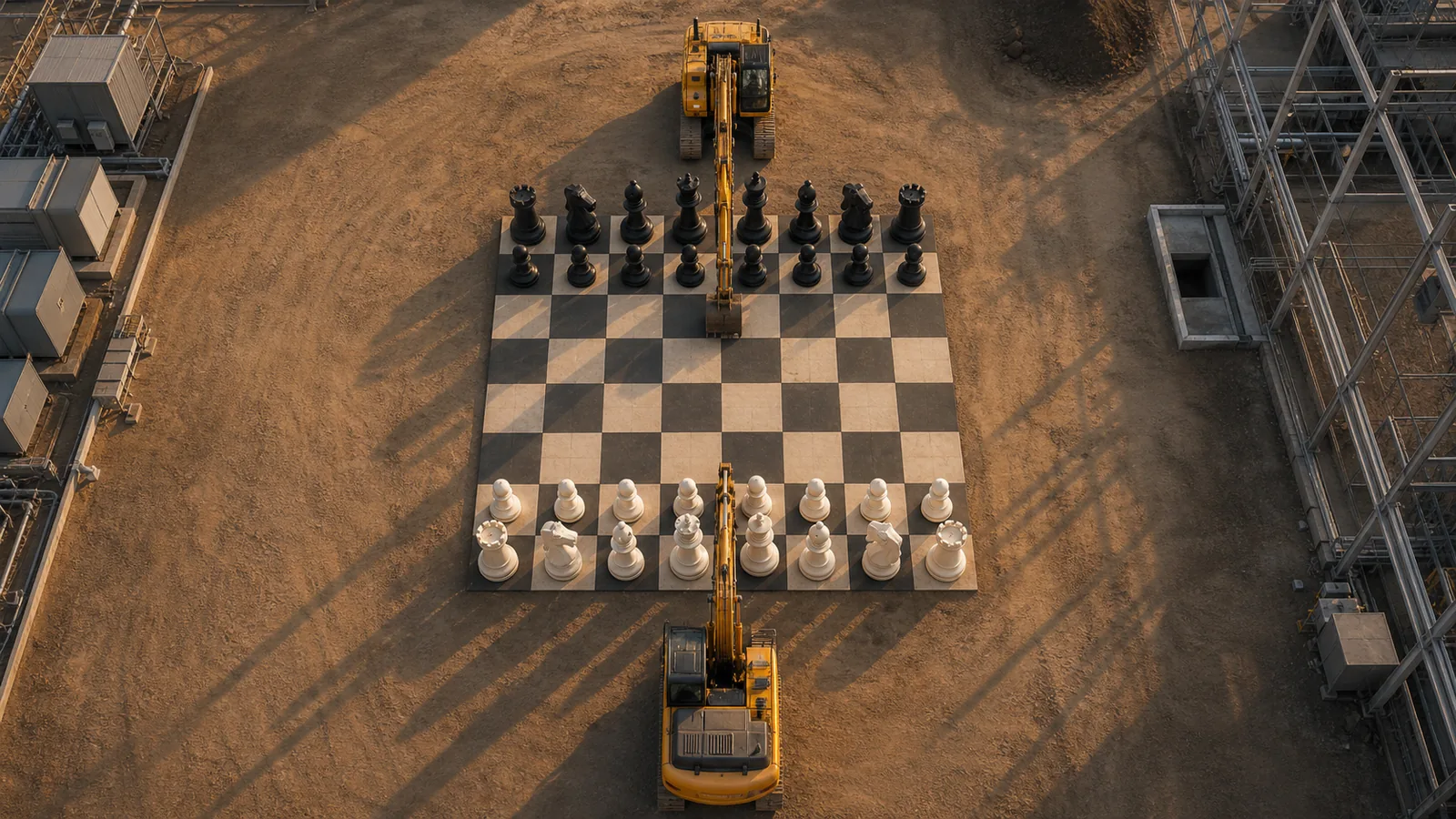
When two excavators played a game of chess at our construction site to mark International Chess Day, many took it as simply a nice performance. But, honestly, the analogy turned out to run much deeper.
The one who thinks ahead wins
In chess, it isn’t the player who makes the flashiest move who wins. It’s the one who thinks several moves ahead. In building data centers, it’s the same story.
Today more than 80% of demand for Akashi comes from international clients. For a country that until recently wasn’t even on the map of commercial data centers, that’s a strong result. But this demand didn’t appear by chance — it’s the result of decisions made several years ago.
The moves that looked debatable
Almost everything that seems obvious today looked like a debatable decision a few years ago.
- The first commercial Tier IV in Central Asia. When we decided to build it, many thought we were crazy: too expensive and too complex for the region. Today it is precisely this level of reliability that became one of the reasons international companies started considering Kazakhstan as a home for their infrastructure at all.
- Our own high-voltage power line with spare capacity. Many asked: why so much? Today that headroom lets us scale without building new energy infrastructure — and lets us plan dedicated modules for high-density AI workloads right now.
- 11 hectares of reserved land. That looked excessive too. Today it is exactly the combination of land and power that allows the project to keep growing, instead of hitting limits after the first module launches.
- International PR and marketing while still under construction. To many that seemed strange. But trust and demand are built in advance too: you can’t start selling infrastructure projects a month before opening.
The opening decides the endgame
That is why building data centers is so much like chess. Here it isn’t the one who makes the most beautiful move who wins, but the one who, already in the opening, understands what the position will look like in the endgame.