

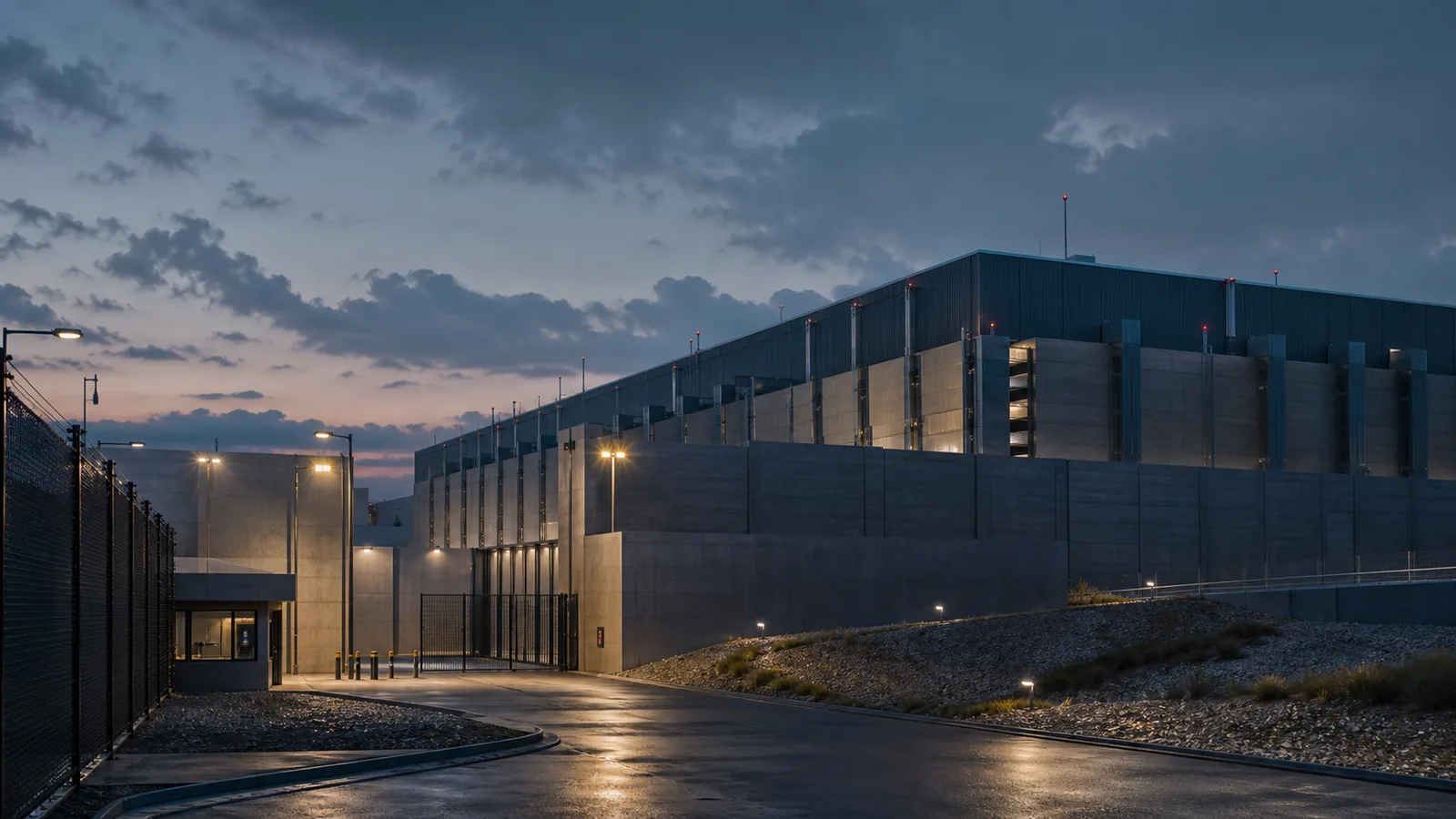
Recent weeks have confirmed what the industry long suspected but preferred not to say aloud: data centers and cloud regions can no longer be considered neutral infrastructure. Following strikes on Amazon Web Services (AWS) facilities in the UAE and Bahrain, it became clear that in a modern conflict zone, the assets at risk are no longer just oil terminals, ports, and power lines — but also the computing capacity on which banks, logistics, public services, and corporate IT systems depend.
This is no longer an isolated incident. After the first Iranian strikes on March 1, new episodes followed: AWS confirmed an incident in Bahrain, and Iran publicly identified several major technology companies as potential targets. A new practice is forming before our eyes — digital infrastructure is becoming a target in armed conflict.
The technical dimension is telling: the attacks simultaneously took down multiple availability zones across AWS regions in the Middle East. In practice, this means the standard redundancy logic on which cloud architecture is built failed — because the failure occurred not locally but at the regional level.
Before the current escalation, the Middle East was one of the most aggressively growing markets for digital infrastructure. AWS is building an infrastructure region in Saudi Arabia with a declared investment of over $5.3 billion. Microsoft is launching its Saudi Arabia East infrastructure region in the same country. In the UAE, Microsoft is developing infrastructure projects worth more than $15 billion.
Against this backdrop, another less obvious but critically important risk emerged: the region’s dependence on subsea infrastructure. For the first time, key data transmission routes — through the Red Sea and the Strait of Hormuz — are simultaneously inside an armed conflict escalation zone. A significant portion of global internet traffic between Europe, Asia, and Africa passes through the Red Sea, and in a conflict environment, cable maintenance becomes extremely difficult. This means disruptions can be not just local but systemic.
This is precisely why what is happening matters far beyond the region. It changes the very logic of site selection for digital infrastructure. Previously, investors prioritized energy costs, tax regime, construction speed, and proximity to clients. Now physical security, geopolitical neutrality, supply chain resilience, and global network connectivity join that list.
Another industry novelty: standard insurance mechanisms generally do not cover war risks, and presence in a conflict zone is beginning to mean additional, often difficult-to-forecast costs for data center operators.
Concentrating cloud and AI capacity in a single zone — however fast-growing — while it remains turbulent is starting to look less like an opportunity and more like a systemic risk.
For Kazakhstan, this is a window of opportunity, but not a reason for self-delusion. Kazakhstani data centers are unlikely to compete on equal terms with Middle Eastern ones or capture the full shift in demand. But our country can offer what is becoming critically important in the new reality: a stable jurisdiction, a transit position between markets, and the ability to host backup and new capacity outside high geopolitical risk zones.
Importantly, this is no longer theoretical: two different infrastructure scenarios are actually forming in the country — Akashi in Astana, a commercial Tier IV data center with a projected capacity of around 100 MW, and the “Valley of Data Centers” in Ekibastuz, developing as a campus model with scaling potential to 1 GW. These are different approaches, but together they show that Kazakhstan is already discussing not abstract digitalization but the real architecture of large-scale computing capacity.
The main takeaway for the market is simple: before our eyes, the data center is ceasing to be just a storage facility plugged into an electrical grid. It is becoming an element of critical infrastructure for entire regions and even states.
That means the winners will not be just the cheapest or fastest facilities, but those that can simultaneously guarantee reliability, connectivity, and predictability.
In that sense, Kazakhstan’s choice as a data location for global players may turn out to be an unexpected but sought-after answer to the new vulnerability in global digital infrastructure.
Source: Kursiv Media