

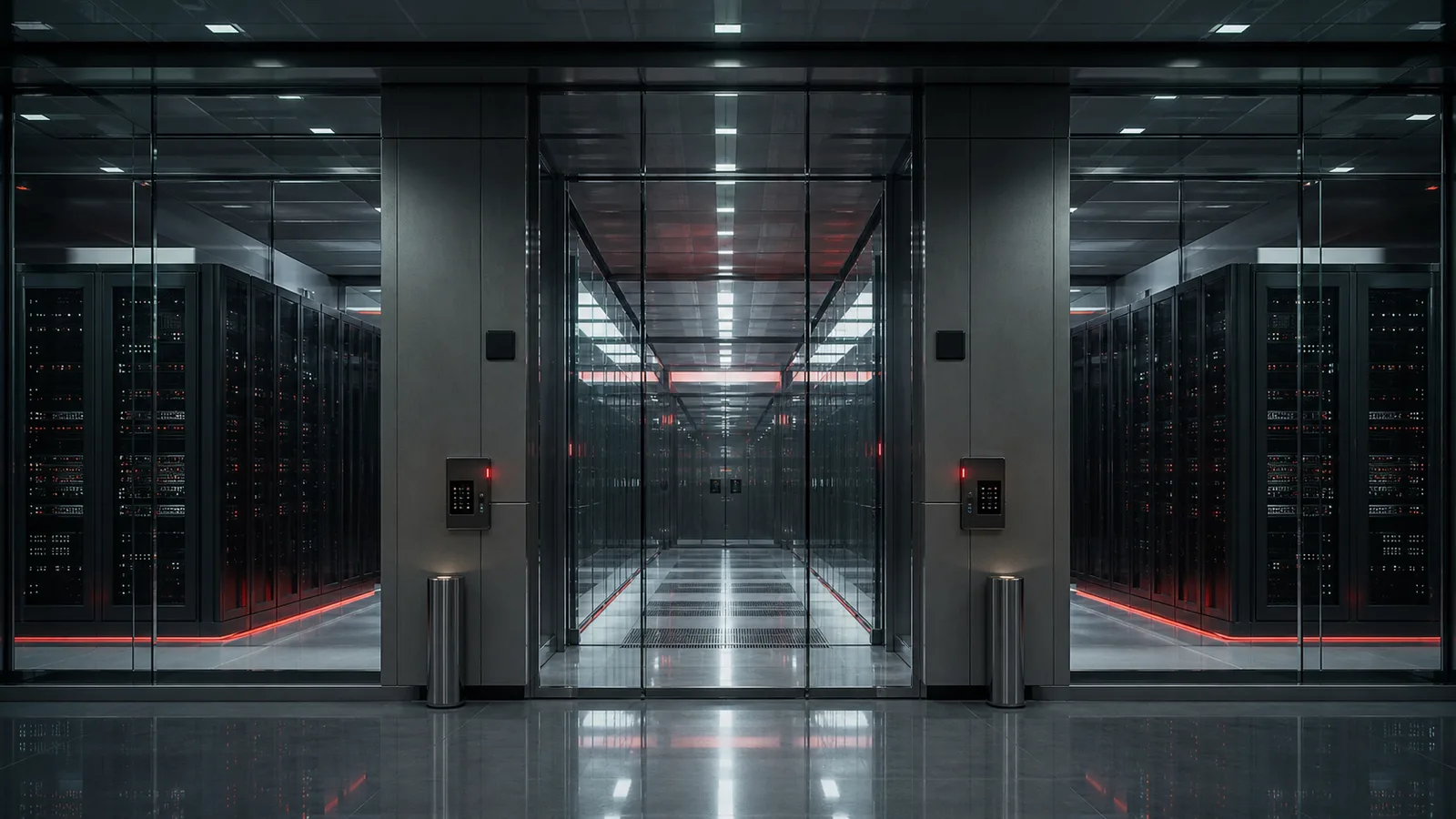
The global digital economy is entering an era where data has become the resource keystone determining state and continental competitiveness. Daily data volumes grow exponentially, while processing and storing this flow has transformed into a new infrastructure race. Consequently, data centers cease being auxiliary objects, becoming the critical infrastructure of the 21st century — analogous to gold-reserve storage facilities, except containing terabytes of data, computational capacity, digital services, and AI models instead of bullion.
In these circumstances, Kazakhstan faces a choice: either accept the consumer role with external-infrastructure dependency — becoming a digital colony — or occupy regional digital-transit-hub positioning for global data and AI computing, becoming a digital autonomy.
A systemic capacity deficit
Global markets already encounter systematic deficits. Data-center capacity reserves are 12–18 months before launch. For instance, Singapore, Japan, Germany, and certain American facilities reserve rack-places before construction starts.
These deficits particularly worsen from AI-load growth. Generative AI models require a different category of engineering infrastructure: high per-rack power consumption and powerful cooling. Worldwide computing-capacity facilities appear insufficient. Forecasts project approximately $5 trillion invested in data centers within five years, with global data-center capacity growing to a minimum of 122 GW by 2030.
The capacity-reservation trend is now visible in Kazakhstan.
“The Kazakh manifestation might exceed developed-market intensity. We observe this directly: our data center began reserving at the foundation stage. Companies respond quickly and pragmatically — they understand that hesitation means no free racks.” — Vladislav Minkevich
Akashi’s first module, launching next year, has already reserved 61% of projected capacity.
What’s driving demand
Demand for data-center services stems from Kazakhstan’s accelerated digitalization: fintech, government services, telecom, e-commerce, streaming, and the first AI teams create increasingly voluminous, sensitive data. However, capable infrastructure forms more slowly. Market players estimate that the currently-available 3,800 racks already inadequately cover current digital traffic, disregarding future loads entirely.
“Kazakhstan outgrew the previous quantity of power. Data volumes expand faster than the market constructs. Without creating next-generation infrastructure, tomorrow we import computing capacity like energy-dependent countries import electricity.”
Data centers become not supplementary to digital services but indispensable foundations. Without them, financial transactions, cloud services, AI platforms, or IT development remain impossible. Data accessibility, processing speed, failure resilience — all depend critically on local infrastructure.
“We inhabit interesting times when information access can readily restrict. Therefore, owning a personal data-processing center proves important — maintaining digital-service operations independent from external factors. This is digital autonomy.”
International demand for Akashi
Notably, Akashi-capacity demand transcends the internal market. Among the companies reserving capacity exist technology players from China and the USA requiring cloud, CDN, and AI-load platforms. “When international clients lock capacity in advance, this demonstrates two things: project trust and Kazakhstan becoming a legitimate international data-center market for high-load infrastructure.”
The new types of demand — prompted by AI and high-density computing — require fundamentally different data-center engineering architectures, differing from traditional facilities. Akashi Data Center is being created with new technological cycles in mind: Tier IV fault-tolerance, 100 MW capacity, thousands of racks, and AI-load-adapted engineering systems.
Why geography matters
Tier IV data centers are absent throughout Central Asia. This fact, combined with Kazakhstan’s strategic geography, attracts international Akashi clientele. The country sits between Europe, the Middle East, and Asia — three of the largest cloud-service consumer regions. For global technology companies, such positioning is strategic, permitting transit-hub construction and latency optimization.
Within this context, Akashi Data Center establishes the foundation for Kazakhstan’s digital-transit-hub creation — the first such project in the region.
The energy story
Extreme data-center fault tolerance requires substantial engineering-system energy expenses, since Tier IV schemes require dual-system redundancy. Consequently, energy provision becomes a key implementation requirement. Kazakhstan’s energy capacity remains constrained. Despite atomic-station construction planning for additional reserves, its waiting period threatens missing several technology-growth waves.
“Waiting for new major national generation deployment risks missing the moment. The world won’t stop; AI-industry growth continues. Therefore we examine personal gas-generation construction for Akashi’s needs with future-scaling potential. This isn’t merely reserves — it’s infrastructure development without external-capacity reliance.”
Such solutions establish novel industry standards: large data centers transcend an energy-consumption net position, no longer being classical IT objects but comprehensive industrial projects impacting energy, telecom, engineering services, and adjacent sectors.
“Kazakhstan can become the regional cloud-service operation origin. This is a once-per-decade opportunity. The key: not missing it.” — Vladislav Minkevich