

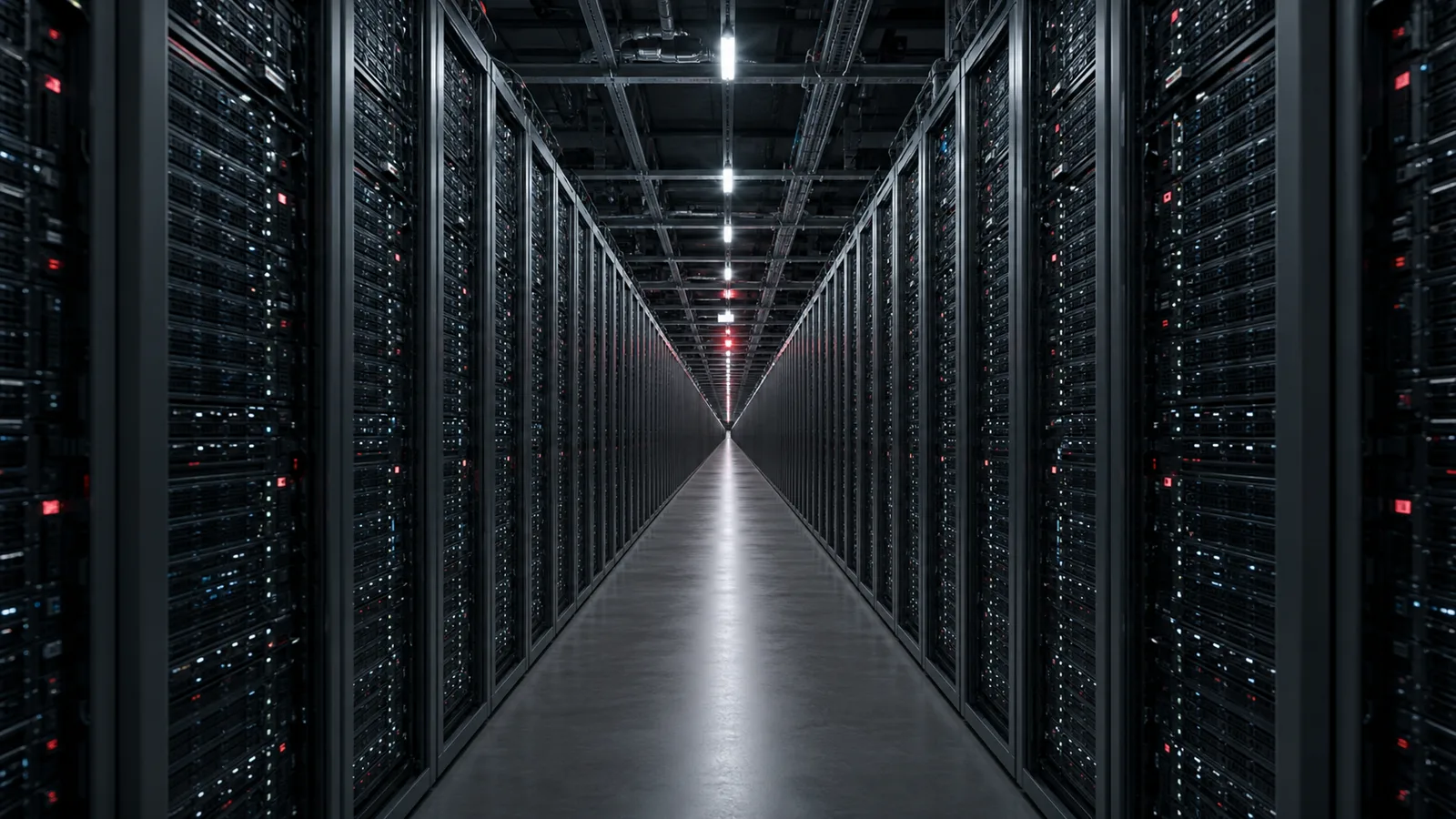
Central Asia, particularly Kazakhstan, faces growing demand for modern data centers. Digital-economy transformation has become a state objective, with experts valuing the regional market in hundreds of millions of dollars.
The market and the shortage
According to research firm Arizton, the Central Asian data center market will grow from $65 million (2022) to $179.7 million by 2028 — approximately 18.5% annual growth. However, investors develop infrastructure unevenly, already creating local capacity deficits.
Per IKS-Consulting, Kazakhstan’s commercial data centers held 3,775 racks by late 2024 (approximately 9% annual growth), versus 3,463 in 2023. Colocation-service demand continues surpassing new-capacity introductions. The Uptime Institute notes that global digital-load growth and AI-infrastructure transitions intensify pressure on power grids, engineering resources, and the labor market.
Global players — including Asian and Middle Eastern companies — increasingly diversify where they place computational capacity. Kazakhstan becomes a natural platform: geographically close, energetically stable, and regulatorily open.
Project scope
Akashi Data Center is a Tier IV facility (Uptime Institute certification), designed for 100 MW and 4,200 racks. It was conceived as a platform covering Kazakhstan’s internal demand and neighboring-market requests simultaneously.
“We see a rapidly growing regional need for computational capacity for digital development. Akashi is infrastructure that ensures business, state, and international-company reliability, energy, and predictability.” — Vladislav Minkevich, CEO
“A 500-rack facility can’t satisfy Kazakhstan or international-player needs. We’re building with surplus. Today it’s important to think beyond data storage — to ensuring sustainable energy, cooling, and AI-load accessibility.”
The project has already drawn interest from leading global companies — Microsoft, Amazon, Google, China Mobile International, and Virtuozzo. 500+ technology companies have submitted collaboration requests.
Energy independence
Akashi’s key distinction: energy independence. In parallel with data-center construction, the project develops a proprietary gas-electric station reaching 1 GW capacity, ensuring low energy cost and peak-load stability.
Regional context
Neighbouring countries are similarly expanding capacity. Azerbaijan’s AzInTelecom is developing state cloud and constructing new data centers with EBRD support. Uzbekistan signed a 300 MW project memorandum with Linkwise.
Such projects coincide with government priorities. President Kassym-Jomart Tokayev’s recent address emphasized the necessity of accelerating artificial-intelligence development. Kazakhstan created the Ministry of Artificial Intelligence and Digital Development to facilitate exactly these tasks.
Akashi stands out as the region’s only Tier IV project — and as the only one with the capacity reserves international hyperscalers actually need.